The winter was going so smoothly. January had a deep, sustained cold, punctuated by a thick layer of ice falling in the final week, which lay on the vineyard through mid-February. Winter pruning came to a halt, so we turned our focus to the wine cellar: tending barrels, organizing, building a lab bench and plastering the walls. Despite the delays in field work, pruning was fast and efficient, and the vines were looking hale and well-formed. March was relatively cool, and we were imagining a delayed bud break, but this was not to be. Several days of 90° temps during the 2nd week of April accelerated bud break, leaving us vulnerable to the killing frost that dropped on April 21st. Our initial optimism about the buds that hadn’t yet opened was dashed as it became clear that widespread damage was sustained — leading to a potential crop loss of 60-70%. Adding insult to injury, a wicked spring drought stressed young vines which were already struggling to shake off the frost damage.
Is it All Worth It?
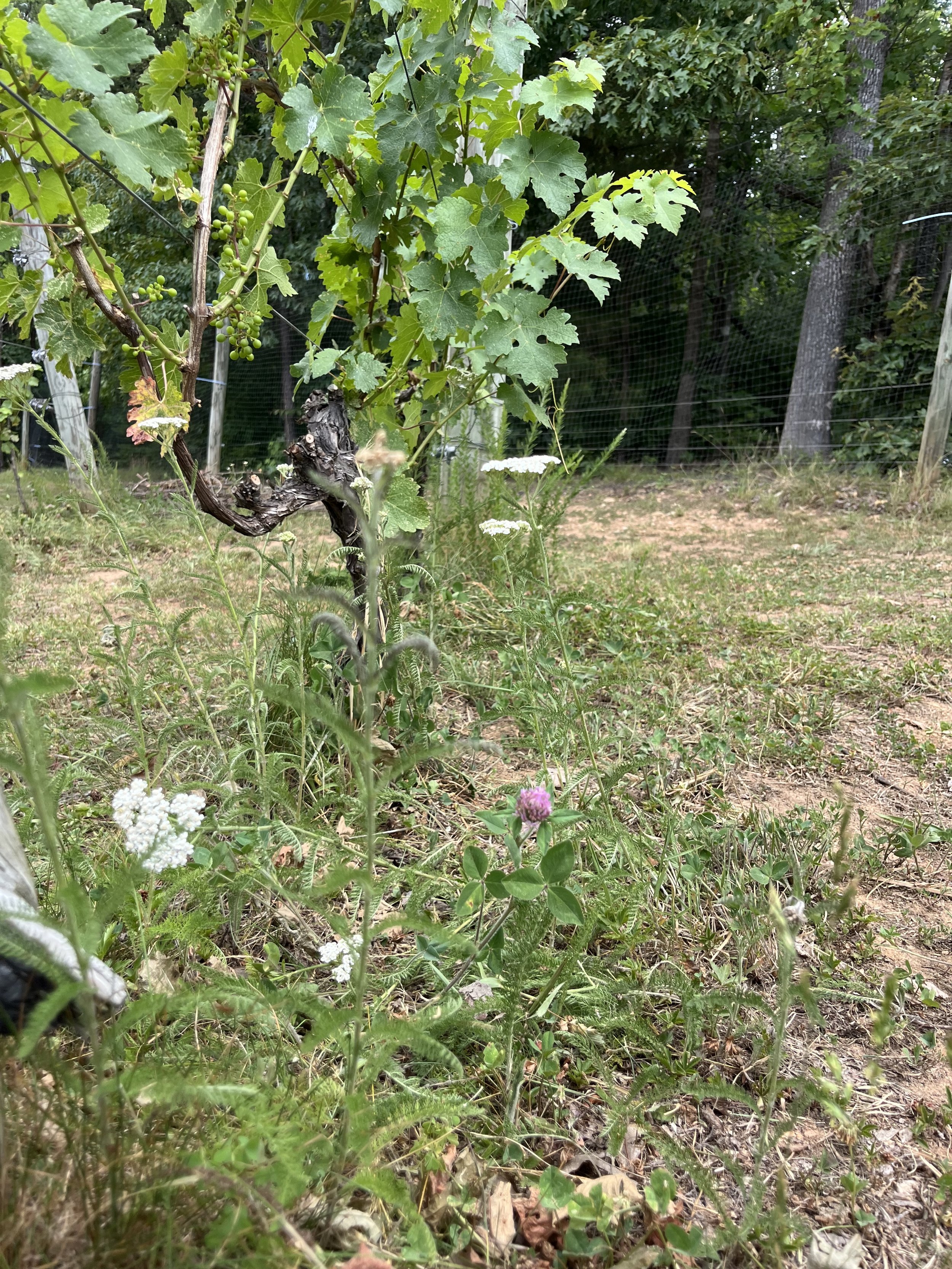
It’s been an emotionally taxing time. Even the damn wildflowers that herald the transition from spring to summer are only sparsely showing themselves this year, maybe from frost, or from drought, who knows, but this year they cling only to the ends of the rows nearest to the wood-line (where the frost damage was also minimal). One afternoon, hangry from a lunch several hours delayed, I was driving through half dead vines and the wheel fell off the fertilizer tank, crashing into the vine row, and spilling expensive agricultural amendments as it skidded behind the tractor. I nearly wept, looking at the wreckage strewn across the tattered vineyard, thinking to myself that it was all just too hard, and wondered if we should persist.
Soon, David came down the hillside, calmly helping me get the tank back into shape so we could finish the job. We went home, then came back and spent a morning tasting the final blend of our 2024 vintage, and exploring potential blends from our 2025 barrels. We think they are beautiful -- new wines to hold our attention and to push our troubles into the periphery. They're each very distinct wines, expressing a crystal-clear window into their respective vintages, yet also showing the kinship of their common hillside. Tannin and fruit abound. Joyous to drink — we can’t wait to share them with you (2024 released in September). So yes, it’s all been worth it, and the trials of 2026 will be surmounted, though clearly it won’t be easy.
The Rules of the Game
We know the rules of the game: if the vines we plant break-bud before the last frost of spring, we frolic with heartbreak. Corollary to that rule is that climate change and weather aberrations will confound our best efforts at choosing vines to fit our climatic norms. We will continue to plant new rootstocks and select vines that break bud later, but there is no guarantee if 90° days become the norm in April. In short, growing grapes is to court heartbreak, period, the end. As Jim Morrison said, "no one here gets out alive”, So we plant the vine, spill the wine, dig that girl and guy, and put wine in a bottle to see us through lean vintages and hard times.
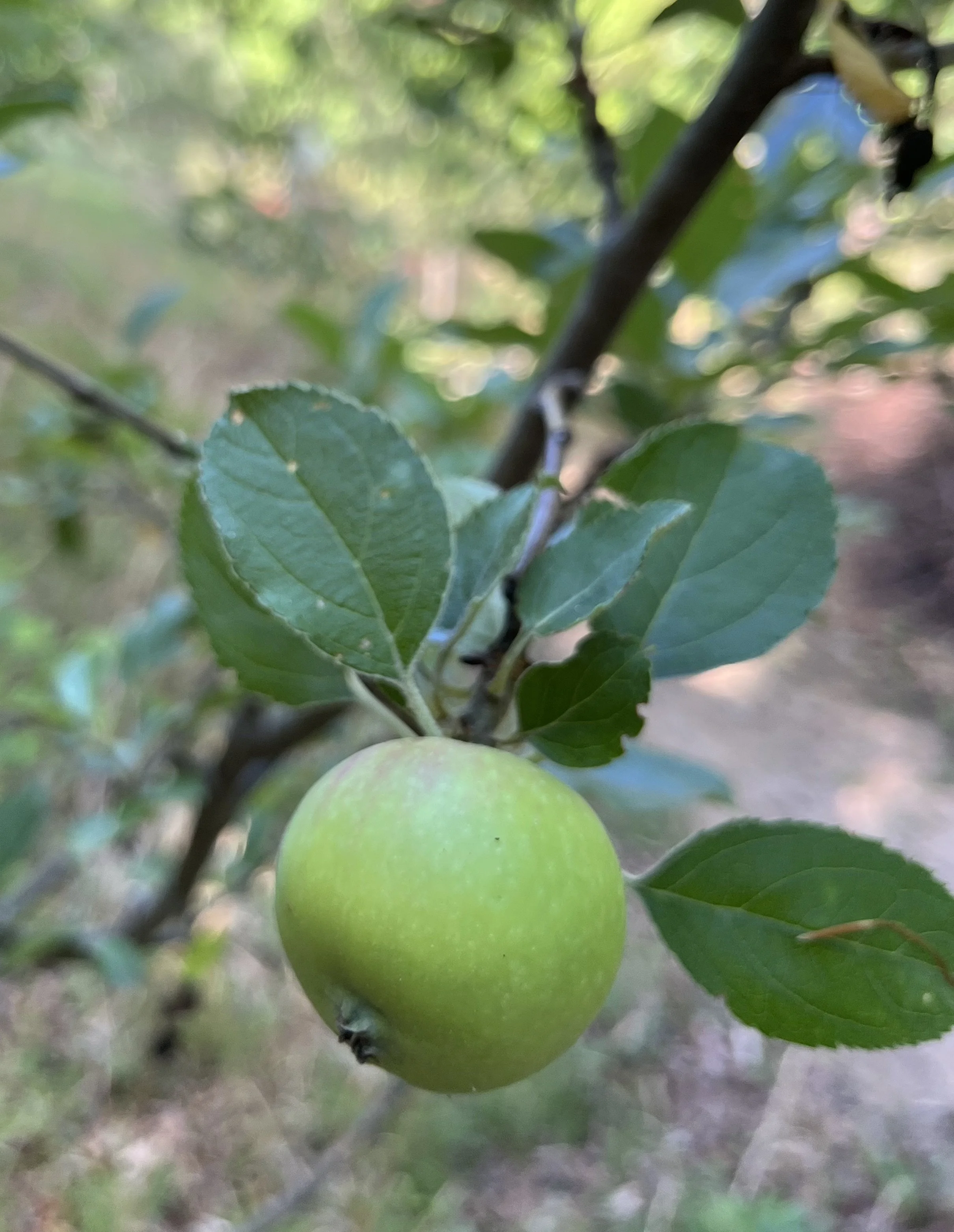
While we’ll have our smallest grape harvest since our first in 2017, we’ll have our first harvest from the heirloom cider apple trees that we planted in 2020. So we’ll have some tasty thirst quenchers during the summer of 2027, which is something to smile about.
2026: Small But Beautiful
The way forward is becoming clearer. This will be a small vintage for certain, and because the frost caused a wide variation in the development pace of various shoots, we face the prospect of non-uniform ripening of berries. Once the grapes begin to change color in late-Jy/early-August, we will get our first inclination of just how wide the ripening window may be. And in September, as we chew berries and taste the texture of the fruit, we will decide whether we will pursue multiple harvests, drop clusters that are too far behind, or lean into the fruit diversity in the cellar via gentler extraction or some other approach.
We know there will be lean times and boom times in farming, and the community of people who fund this farm by purchasing our wine and spreading the word sustains us both emotionally and financially. So thanks for reading, and thanks so much for supporting our project!!